



This is the second part of our two part interview with James, Founder Phuture Phillies.
QUESTION #5
OCP - Can you speak a little bit about the 20-80 scale and player projection?
James - The 20-80 scale is how scouts evaluate a player's individual tools and then his potential as a whole. It essentially is 20-80 because 50 is considered average, with 3 standard deviations to either side. 80 is the absolute elite, and is very rarely thrown around. An example of an 80 tool would be Justin Verlander's fastball or Mike Stanton's raw power. An example of a 20 tool would be Bengie Molina's running speed. Most MLB players have tools that grade one either side of 50. 60 is considered above average or "plus", as scouts say, and 70 would be considered well above average. On the other side, 40 is below average, and 30 is well below average. Scouts will rate each player's individual tools on the 20-80 scale and then come up with an overall score. Scouts also tend to give both present grades and projected grades, especially for younger players. For example, a 19 year old prospect in A Ball might be a physical specimen who hits moon shot home runs in batting practice to all fields, but during games, he struggles to make contact and his swing is more mechanical, cutting off his power. A scout may give his present power grade a 50, but note that his future power grade is a 70, if he is able to make adjustments to his swing and approach. For hitters, the 5 tools are: hit for average, hit for power, running speed, fielding ability, and throwing arm strength. For pitchers its less defined, but generally scouts focus on: fastball velocity + movement, breaking ball quality, changeup quality, how smooth/clean your delivery/mechanics are, and body projection. The last one is important for high school kids especially. If you're already 6'4, but very skinny and only throwing 88-90, a scout could project you to add 5 mph to your fastball after you add 30 pounds of muscle with a professional workout regimen. This doesn't always happen, which is another reason scouting is so damn difficult.
QUESTION #6
OCP - you have seen and met a lot of prospects; are there any common traits that you've noticed that distinguish the prospects that make it and the ones that don't?
James - I've done a lot of thinking about this question over the past 5 years. There is no secret formula for what makes a good prospect. Most MLB stars are excellent athletes who possess well above average raw ability. Raw athleticism is important, but I believe the two things that ultimately separate the guys who go on to have successful big league careers and those that never make it are injuries and the ability to make adjustments. Some players bodies are apparently not made for the rigors of playing professional baseball. Lots of guys who were considered elite prospects in high school/college get to the minors and struggle with one injury after another. In some cases this may be because of their conditioning program or lack of one, but in a lot of cases, it may just be that their body can't handle the wear and tear. Some guys break down easier than others. The second part, the ability to make adjustments, is what I think really separates the talent though. You don't have to be a rocket scientist to play baseball, but its a game of patterns. Pitchers need to learn how to "set up" hitters by using different pitches at different locations. Batters have to understand how a pitcher is trying to attack them. When you see a pitcher throw 2 straight inside fastballs, as a hitter, you can probably guess that a breaking ball away is coming. But it seems some guys aren't able to make this recognition in real time. No one will ever tell you they think Manny Ramirez could have been an astro-physicist, but his preparation and practice is legendary, and one of his biggest strengths was the ability to recognize patterns. Some guys, both hitters and pitchers, are never able to make these adjustments. Some players don't take well to professional coaching. Some guys refuse to make swing adjustments or pitching mechanics adjustments. In short, it's just a really difficult game, and a lot of things have to go right for you to make it to the majors and then succeed in the majors.
QUESTION #7
OCP - I'm going to put you on the spot with a quick piece of trivia... honor system applies… who is the first draftee to sign a total contract (signing bonus + salary) worth over $1 million?
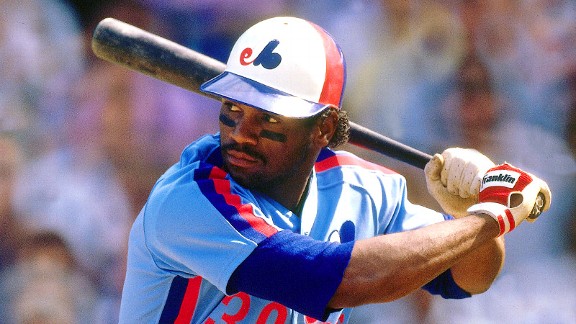
James - I know Brien Taylor, the Yankees prospect who got hurt in a fight and was never the same, was the first player to receive a million dollar signing bonus. The first MLB player to make $1M in a season was the Cobra, Dave Parker. I know this because I remember doing a lot of research on signing bonuses for my draft preview work this year.
CORRECT ANSWER:
In 1986, Bo Jackson became the first draftee to earn $1 million (salary plus signing bonus). Cobra was the first major league player to surpass the million dollar mark in 1979 but he earned that with his 1978 MVP award.Jackson
QUESTION #5
OCP - Can you speak a little bit about the 20-80 scale and player projection?
James - The 20-80 scale is how scouts evaluate a player's individual tools and then his potential as a whole. It essentially is 20-80 because 50 is considered average, with 3 standard deviations to either side. 80 is the absolute elite, and is very rarely thrown around. An example of an 80 tool would be Justin Verlander's fastball or Mike Stanton's raw power. An example of a 20 tool would be Bengie Molina's running speed. Most MLB players have tools that grade one either side of 50. 60 is considered above average or "plus", as scouts say, and 70 would be considered well above average. On the other side, 40 is below average, and 30 is well below average. Scouts will rate each player's individual tools on the 20-80 scale and then come up with an overall score. Scouts also tend to give both present grades and projected grades, especially for younger players. For example, a 19 year old prospect in A Ball might be a physical specimen who hits moon shot home runs in batting practice to all fields, but during games, he struggles to make contact and his swing is more mechanical, cutting off his power. A scout may give his present power grade a 50, but note that his future power grade is a 70, if he is able to make adjustments to his swing and approach. For hitters, the 5 tools are: hit for average, hit for power, running speed, fielding ability, and throwing arm strength. For pitchers its less defined, but generally scouts focus on: fastball velocity + movement, breaking ball quality, changeup quality, how smooth/clean your delivery/mechanics are, and body projection. The last one is important for high school kids especially. If you're already 6'4, but very skinny and only throwing 88-90, a scout could project you to add 5 mph to your fastball after you add 30 pounds of muscle with a professional workout regimen. This doesn't always happen, which is another reason scouting is so damn difficult.
QUESTION #6
OCP - you have seen and met a lot of prospects; are there any common traits that you've noticed that distinguish the prospects that make it and the ones that don't?
James - I've done a lot of thinking about this question over the past 5 years. There is no secret formula for what makes a good prospect. Most MLB stars are excellent athletes who possess well above average raw ability. Raw athleticism is important, but I believe the two things that ultimately separate the guys who go on to have successful big league careers and those that never make it are injuries and the ability to make adjustments. Some players bodies are apparently not made for the rigors of playing professional baseball. Lots of guys who were considered elite prospects in high school/college get to the minors and struggle with one injury after another. In some cases this may be because of their conditioning program or lack of one, but in a lot of cases, it may just be that their body can't handle the wear and tear. Some guys break down easier than others. The second part, the ability to make adjustments, is what I think really separates the talent though. You don't have to be a rocket scientist to play baseball, but its a game of patterns. Pitchers need to learn how to "set up" hitters by using different pitches at different locations. Batters have to understand how a pitcher is trying to attack them. When you see a pitcher throw 2 straight inside fastballs, as a hitter, you can probably guess that a breaking ball away is coming. But it seems some guys aren't able to make this recognition in real time. No one will ever tell you they think Manny Ramirez could have been an astro-physicist, but his preparation and practice is legendary, and one of his biggest strengths was the ability to recognize patterns. Some guys, both hitters and pitchers, are never able to make these adjustments. Some players don't take well to professional coaching. Some guys refuse to make swing adjustments or pitching mechanics adjustments. In short, it's just a really difficult game, and a lot of things have to go right for you to make it to the majors and then succeed in the majors.
QUESTION #7
OCP - I'm going to put you on the spot with a quick piece of trivia... honor system applies… who is the first draftee to sign a total contract (signing bonus + salary) worth over $1 million?
James - I know Brien Taylor, the Yankees prospect who got hurt in a fight and was never the same, was the first player to receive a million dollar signing bonus. The first MLB player to make $1M in a season was the Cobra, Dave Parker. I know this because I remember doing a lot of research on signing bonuses for my draft preview work this year.
CORRECT ANSWER:
In 1986, Bo Jackson became the first draftee to earn $1 million (salary plus signing bonus). Cobra was the first major league player to surpass the million dollar mark in 1979 but he earned that with his 1978 MVP award.


